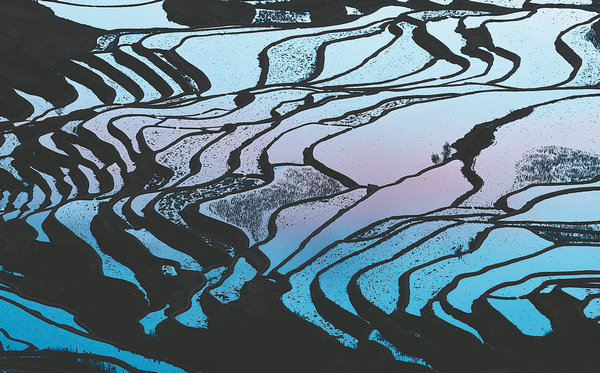
Hani Rice Terraces
Introduction
The Hani Rice Terraces, an iconic cultural landscape located in Yuanyang county, Honghe prefecture, Yunnan province, China, represent a unique agricultural ecosystem crafted by the Hani people over the past 1,300 years. Covering approximately 666.67 square kilometers, these rice terraces cascade down the slopes of the Ailao Mountains to the banks of the Honghe River, creating a stunning visual spectacle that has been recognized as a UNESCO World Heritage Site since June 22, 2013.
Historical Background
The development of the Hani Rice Terraces began over a millennium ago as the Hani people sought to cultivate the steep slopes of the Ailao Mountains. Through the centuries, they have constructed an intricate system of channels to transport water from the forested mountaintops to the rice fields below. This sophisticated water management system supports the cultivation of red rice, the area's primary crop, and involves an integrated farming system that includes water buffaloes, cattle, ducks, fish, and eels.
The terraces are not only a marvel of agricultural ingenuity but also reflect the Hani people's cultural and spiritual beliefs. The Hani worship natural elements such as the sun, moon, mountains, rivers, forests, and fire, and this reverence for nature is deeply embedded in their agricultural practices. The terraces serve as a testament to the harmonious relationship between the Hani people and their environment, showcasing their resilience and adaptability.
Cultural Heritage
The Hani Rice Terraces exemplify a finely-tuned agricultural, forestry, and water distribution system that is reinforced by long-standing socio-economic and religious practices unique to the Hani culture. This system, known as the "Man-God Unity social system," emphasizes the interdependence between humans and the divine, as well as individuals and their community. This cultural heritage is sustained through ceremonies, songs, and dances that are integral to the Hani way of life.
Ducks play a vital role by fertilizing young rice plants, while chickens and pigs contribute to the nourishment of more mature plants. Water buffaloes are used to slough the fields in preparation for planting, and snails in the water help control pests. The system not only enhances rice production but also reinforces communal bonds and affirms the sacredness of the natural world.
Ecological and Social Significance
The Hani Rice Terraces are an exceptional demonstration of ecological and social balance, illustrating the sustainable interaction between human beings and their environment. Despite the challenges posed by the rugged terrain of the Ailao Mountains, which limits the use of modern agricultural machinery, the terraces have been maintained and continue to flourish as a result of the dedication and innovation of the Hani people.
The terraces also serve as a vital habitat for diverse flora and fauna, contributing to biodiversity conservation in the region. The economic benefits derived from the terraces, such as the sale of red rice, paddy fish, and duck eggs, have improved the livelihoods of local farmers, further emphasizing the importance of preserving this cultural landscape.
Tourism and Modern Developments
The Hani Rice Terraces have become a popular tourist destination, attracting visitors from around the world who are drawn to the breathtaking scenery and rich cultural heritage of the area. Efforts have been made to balance tourism development with cultural preservation, ensuring that the traditional Hani way of life is not compromised.
In recent years, initiatives have been implemented to integrate traditional practices with modern innovations. Local entrepreneurs and government agencies have collaborated to promote sustainable tourism and agricultural practices, enhancing the economic prospects of the region while safeguarding its cultural and ecological integrity.








